
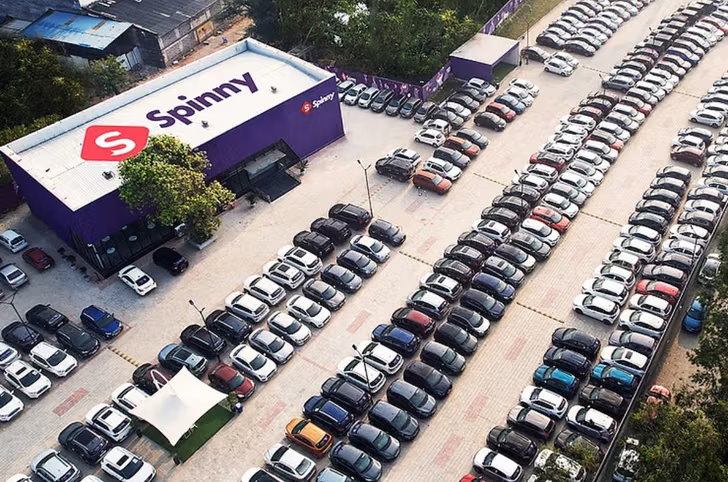
Autocar India, in partnership with Spinny, has released the Mobility Intelligence Report 2026, providing a comprehensive analysis of India’s rapidly expanding used car market. The fourth edition of the report examines vehicle depreciation, resale value, buyer preferences, financing trends, and the evolving role of pre-owned electric vehicles (EVs).
The report is based on more than 11,000 used car transactions across nine major Indian cities, offering valuable insights into how the resale market and vehicle ownership patterns have evolved over the past five years.
Used Car Market Continues to Expand
According to the report, India’s used car market is now approximately 1.39 times larger than the new car market. The sector is growing at an annual rate of 11–13 percent, while the organized used car market is expanding even faster, recording growth of more than 20 percent annually.
Autocar India Editor Hormazd Sorabjee said the used car market has become one of the strongest indicators of changing mobility preferences in India. He added that the report provides valuable insights into vehicle ownership, financing trends, customer preferences, and long-term value retention.
First-Time Buyers Lead the Market
The report reveals that 80–82 percent of used car buyers are purchasing their first vehicle. With entry-level new cars becoming increasingly expensive, many customers are turning to the pre-owned market as a more affordable alternative.
SUVs continue to dominate buyer preferences in the used car segment. In addition, many customers are choosing larger, feature-rich used vehicles that fit within the budget of a brand-new entry-level car.
Financing Fuels Market Growth
Vehicle financing has become a key driver of growth in India’s organized used car market. Around 60 percent of transactions on organized platforms such as Spinny are now financed.
Over the past five years, financing penetration in the used car segment has increased from 16 percent to 32 percent. Easier access to loans is enabling customers to purchase higher-value vehicles while helping the market expand further.
How Much Does a Car Depreciate in Five Years?
The report highlights the average depreciation of vehicles over time:
- A one-year-old car loses around 21 percent of its original value.
- After three years, average depreciation reaches 33 percent.
- A five-year-old vehicle depreciates by approximately 41 percent.
- Even after five years, a vehicle retains nearly 60 percent of its original purchase value.
The average selling price of a three-year-old vehicle included in the study was ₹8.38 lakh, which is roughly equal to the average price of a new car in India in 2020. This shows how the used car market enables buyers to own premium vehicles at significantly lower prices.
Brands and Models with the Best Resale Value
According to the report, Maruti Suzuki, Hyundai, Kia, and Mahindra continue to deliver strong resale value across various vehicle segments.
The models with the strongest value retention include:
- Maruti Suzuki S-Presso
- Hyundai Grand i10 Nios
- Maruti Baleno
- Maruti Dzire
- Hyundai Verna
- Tata Punch
- Hyundai Venue
- Kia Seltos
- Mahindra XUV700
- Maruti Ertiga
EV Resale Market Still Faces Challenges
Although the used car market is growing rapidly, electric vehicles (EVs) continue to face challenges in the resale market.
Unlike petrol and diesel vehicles, EVs still lack standardized resale benchmarks. Concerns over battery health and long-term performance remain the biggest obstacles for buyers. The report suggests that better battery health assessments, greater transparency, and standardized residual value benchmarks will play a crucial role in strengthening the EV resale market and encouraging wider adoption.
Conclusion
The Autocar India–Spinny Mobility Intelligence Report 2026 highlights the growing strength of India’s used car market. Strong financing support, increasing demand from first-time buyers, and impressive resale values of popular models continue to drive the sector’s growth. However, improving transparency and establishing reliable resale benchmarks for electric vehicles will remain a key priority for the industry in the years ahead.