
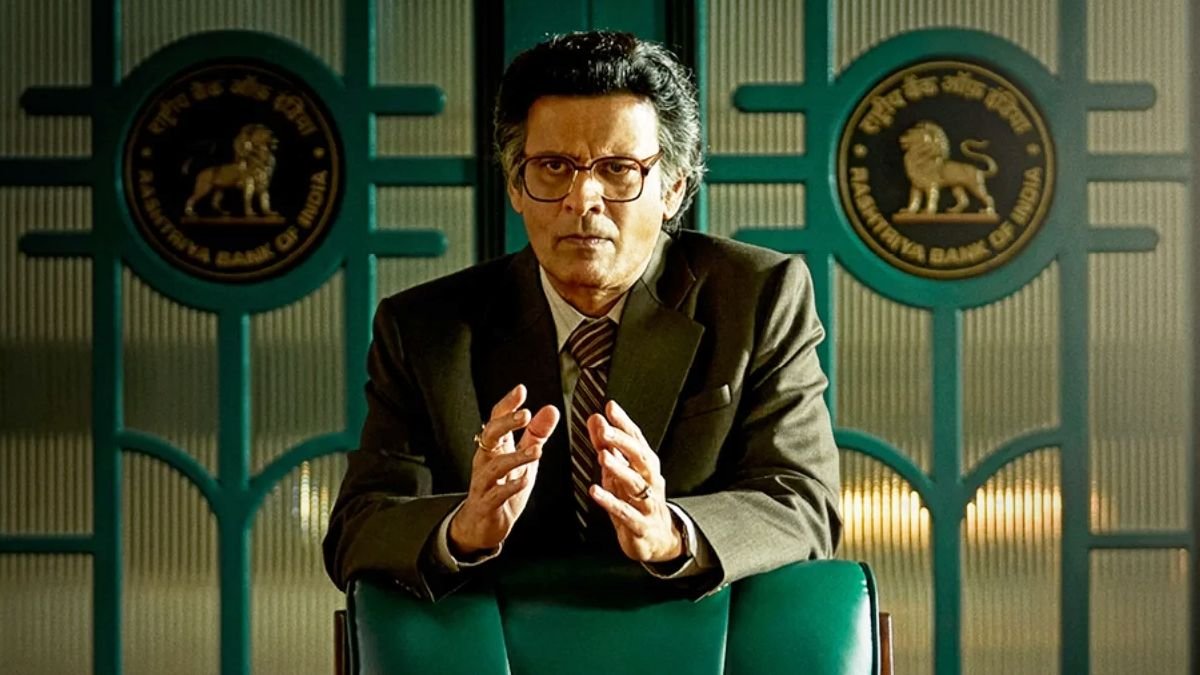
In the early 1990s, India was grappling with a severe economic crisis that pushed the country’s finances to the brink. During this challenging period, then RBI Governor S. Venkitaramanan played a crucial role in stabilizing the economy by overseeing the controversial decision to pledge India’s gold reserves. However, this was not a decision made in isolation—it required the backing of political leaders and senior officials across the system.
Governor is built around this historic episode, with Manoj Bajpayee portraying the RBI chief. Bajpayee delivers the role with seriousness and authority, attempting to capture the weight of the responsibility on his shoulders, although his accent and portrayal occasionally feel inconsistent. The film also presents Atal Bihari Vajpayee as a key supporter whose endorsement helps push the bold economic move forward.
The film arrives at a time when discussions around economic stability and gold reserves have once again entered public discourse. As a result, it had the potential to become a compelling political and historical drama. However, the storytelling often lacks the depth and nuance needed to fully explore such a complex chapter in India’s history.
The film’s perspective is particularly evident in its portrayal of former Prime Minister and economist Manmohan Singh. Widely recognized as a central figure in India’s economic liberalisation, Singh’s contribution is given relatively limited attention, while the narrative places greater emphasis on the governor’s role in the crisis.
Several scenes involving Bajpayee’s character appear designed for cinematic impact rather than historical authenticity. Whether reflecting on life from atop a high-rise building or drawing inspiration from ordinary individuals, the character frequently feels larger than life. At times, the performance even evokes shades of Bajpayee’s iconic Bhiku Mhatre character from Satya.
Adah Sharma’s role as an investigative journalist does little to strengthen the narrative. Her efforts to uncover the truth often come across as exaggerated, while the newsroom sequences lack realism. Once again, Hindi cinema struggles to present journalism and media institutions in a convincing and nuanced manner.
Like films such as The Accidental Prime Minister, Governor simplifies complex political events into a straightforward narrative driven by clear messaging. Weak visual effects and a number of implausible sequences further undermine the film’s credibility, with the governor being shown as personally managing nearly every critical aspect of the operation.
Overall, Governor places greater importance on political messaging and heroic storytelling than on exploring the full complexity of the historical events it depicts. While this approach may appeal to some viewers, those looking for a balanced and fact-driven portrayal may find the film lacking in depth and perspective.